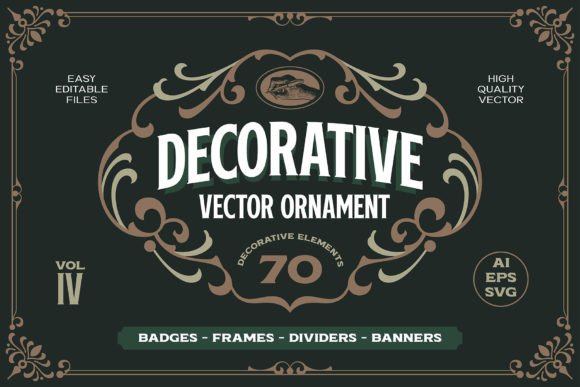
Victorian Ornament Vectors Vol. IV for Graphics & Crafts
I have been testing a new ornamental vector pack this week while preparing a seasonal collection for my Etsy shop. The asset is called Victorian Ornament Vectors Vol. IV. When I first opened the files, I was not expecting the level of detail packed into each element. The collection includes frames, badges, dividers, banners, and a range of decorative flourishes that feel genuinely rooted in Victorian design language without looking dated or overly fussy.
The mood leans classic and elegant, with a touch of antique sophistication. These are not the kind of generic scrollwork graphics you see in every other bundle. The line weight varies nicely, the curves are balanced, and the ornamental density feels intentional. For sellers who build products around vintage aesthetics, romantic themes, heritage branding, or formal stationery, this pack slots in immediately. The visual personality is refined, slightly ornate, and carries a premium feel that can elevate product presentation across multiple platforms.
What struck me first was how versatile the individual elements are. A single badge can anchor a product thumbnail. A pair of mirrored dividers can frame a title on a printable wall art piece. The banners work as text holders for social media graphics. When I started layering these into mockups, the perceived value of the underlying products increased noticeably. That is a real business advantage when you are competing in crowded creative marketplaces.
Testing Victorian Ornament Vectors Vol. IV Across Product Types
Before I list any graphic design asset in a finished product, I run it through a series of practical tests. For this review, I applied the vectors to several product categories I sell regularly. The goal was to see where the ornaments perform best and where they might need careful handling.
I started with printable wall art. The frames in this pack hold text beautifully. I paired a circular badge with a serif font for a quote print and the result felt cohesive and high-end. The ornaments do not compete with the typography; they support it. For invitation templates, the dividers and corner flourishes added a formal touch without overwhelming the layout. I could see wedding stationery designers and event branding creators getting immediate use from these elements.
On the apparel and merchandise side, I tested a few designs on t-shirt mockups and tote bag previews. The vector details held up well at larger print sizes. Because the files are vector-based, scaling is not an issue. For sublimation designs on mugs and tumbler wraps, the ornamental patterns created a sense of structure that plain text or standalone graphics often lack. A mug with a centered badge and a short phrase inside it looked polished and ready for a print-on-demand listing.
For Cricut and Silhouette users, the SVG files require some attention. Not every ornate element translates cleanly into a cut file. I tested a few of the more intricate frames and found that some inner details would need simplification before weeding vinyl. However, the simpler badges and dividers cut beautifully. If you are selling SVG designs for crafters, select the elements with cleaner cutting paths and avoid the most delicate filigree for adhesive vinyl projects. The craft community values clean weeding lines, and you should test every cut before publishing a listing.
How This Ornamental Pack Supports Product Presentation
One of the most underrated uses for a high-quality graphics pack like Victorian Ornament Vectors Vol. IV is in product presentation itself. When I create listing images for my digital downloads, the thumbnail is everything. A plain text overlay on a photo can feel amateur. Adding a subtle ornamental frame or a pair of decorative dividers changes the visual hierarchy immediately. The thumbnail looks more intentional, and that can influence click-through rates on Etsy, Creative Fabrica, or Shopify.
I used the banners from this pack to create cohesive listing images across a mock product bundle. The consistency of the ornament style tied together different product types—a printable, a set of stickers, and a Canva template—into a collection that felt branded. For small business owners who sell across multiple categories, this kind of visual storytelling helps build customer trust. When buyers see a unified aesthetic, they perceive higher quality and are more likely to purchase multiple items.
Product mockups also benefit from these ornaments. I placed a badge on a framed print mockup and a divider on a pillow mockup. The decorative elements added a layer of polish that made the mockups look closer to finished retail products. For sellers who use Placeit or similar mockup tools, overlaying these vectors can differentiate your previews from others using the same base mockups.
Where Victorian Ornament Vectors Vol. IV Works Best
After a week of testing, I have identified several product categories where this ornamental pack truly shines. Large product previews benefit enormously from the detailed frames and banners. Themed bundles, especially those built around vintage, romantic, or formal aesthetics, gain a cohesive decorative language. Printable products such as greeting cards, invitation suites, and planner inserts can use these elements as structural design components rather than mere decoration.
For merchandise graphics, the pack performs well on items where the design is displayed at a visible size. Tote bags, larger apparel prints, and wall art prints give the ornaments room to breathe. Social media graphics and promotional visuals also benefit. A blog graphic with a Victorian badge as a title holder looks more authoritative than a plain text overlay. Creative marketplace listings that use these ornaments in their preview images communicate a sense of care and professionalism.
Handmade business owners who sell physical products can also use these graphics for packaging design. A small ornamental badge on a product tag or a divider on a thank-you card creates a consistent brand identity. The commercial license included with the pack makes this possible, though you should always verify the specific terms before using any design asset on physical packaging for resale.
Where You Should Use Caution
No graphic design asset is perfect for every situation, and Victorian Ornament Vectors Vol. IV has specific limitations that sellers should respect. Tiny sticker designs are the first area where I would exercise caution. The finer details in some ornaments can become muddled at very small sizes. If you are creating a sticker sheet with small individual elements, choose the simpler badges and avoid the most intricate frames.
Overly complex layouts can also suffer. If you already have multiple design elements competing for attention, adding an ornate Victorian frame may create visual clutter. I tested a few combinations where the ornament fought with a busy background pattern, and the result looked chaotic. The ornaments perform best when they have room to stand out. Dark backgrounds require attention too. Some of the finer line details may lose contrast against deep colors, so test on both light and dark surfaces before finalizing a product.
For Cricut and Silhouette projects, as mentioned earlier, the cutting path complexity demands careful selection. Intricate filigree that looks beautiful on screen can become a frustrating weeding experience. If your target audience includes crafters who use vinyl cutters, curate the SVG files you include in your product. Provide only the elements that cut cleanly and note in your product description that the designs have been tested for home cutting machines.
Text-heavy templates also need moderation. If a design already contains long paragraphs of text, adding ornamental dividers and frames can push the layout toward over-design. The Victorian style carries a strong visual presence, and it needs space to feel intentional rather than cluttered. Use the ornaments as accents, not as the dominant element in text-forward products.
Practical Seller Notes From Testing
Before publishing any product that uses this ornamental pack, I recommend running through a checklist that has saved me from customer complaints more than once. First, test the design on real mockups at the actual size your customers will see. A frame that looks elegant at full screen may lose its impact as a thumbnail. Preview your listing image at the size it will appear in search results. If the ornament still reads clearly, you are on the right track.
Check how the design looks on both white and dark backgrounds. I found that some of the thinner lines in this pack benefit from a slightly heavier stroke when placed on dark surfaces. Vector files let you adjust this easily, but it is worth doing before you finalize a product. Print colors are another consideration. If you are creating printable designs, print a test page at home. The warm, antique feel of Victorian ornamentation can shift depending on your printer profile, and you want to catch any color surprises before a customer does.
Verify PNG transparency if you are offering clipart files. The transparent backgrounds should be clean, with no stray pixels around the edges. For SVG files, inspect the cut quality in your design software. Look for overlapping paths, unnecessary nodes, and inner cuts that might tear during weeding. A few minutes of path cleanup can prevent negative reviews from crafters.
Organize your files clearly for customers. A well-structured folder with labeled subfolders for SVG, PNG, and EPS formats communicates professionalism. Include a simple preview sheet showing all the ornaments at a glance. This small step increases perceived value and reduces customer confusion.
When it comes to font pairing, these ornaments work beautifully with a range of type styles. Serif fonts reinforce the classic Victorian mood. Script fonts add a romantic, formal layer. Sans serif fonts create an interesting contrast between old and new. I tested a modern handwritten font inside a formal badge, and the juxtaposition felt fresh and current. Display fonts with high contrast also pair well with the ornate frames. The key is to let the ornament establish the tone and choose typography that either complements or thoughtfully contrasts with it.
Commercial Value for Digital Sellers
For digital product creators who sell on Etsy, Creative Fabrica, or through their own Shopify stores, Victorian Ornament Vectors Vol. IV offers substantial commercial utility. The pack can serve as a foundational design asset across multiple product lines. You can build an entire collection of printable invitation templates, social media graphics, and sublimation designs around a consistent ornamental language. Brand consistency across your product catalog helps with recognition and repeat purchases.
The timeless quality of Victorian ornamentation also means these designs do not feel tied to a fleeting trend. While seasonal design trends come and go, classic ornamentation has steady demand. Wedding stationery, formal event branding, heritage-inspired packaging, and vintage-themed merchandise all have consistent buyer interest. A graphics pack that serves these niches can remain relevant across multiple selling seasons.
From a pricing perspective, assets that include commercial licensing allow you to build sellable products without ongoing royalty concerns. You can create a design once, list it, and sell it repeatedly. This pack includes frames, badges, dividers, and banners that can be combined in countless ways, giving you the raw material to produce a diverse product catalog without needing to purchase additional design assets.
For small business owners who are not full-time designers, these ready-made ornamental vectors bridge the gap between DIY aesthetics and professional polish. A handmade business can elevate its brand identity with a simple badge on product tags or a divider on promotional graphics. The learning curve is minimal, and the visual impact is immediate.
After a full week of testing across printables, merchandise mockups, and digital download products, I can say that Victorian Ornament Vectors Vol. IV earns its place in a commercial creator's toolkit. The pack delivers on quality, the style is cohesive, and the range of elements supports real product creation workflows. It works best when treated as a premium decorative layer rather than a crutch, and it rewards sellers who take the time to test how each ornament interacts with their specific product type and audience.