Palm Tree Vintage Logo Minimalist Vector
Let’s be real: I opened Palm Tree Vintage Logo Minimalist Vector expecting charm—and got it—but what really mattered was whether it would hold up under needle, thread, and real-world wear. I tested it on a linen-cotton blend tote bag for a local boutique’s summer launch, and that’s where this design revealed its true personality—not as a generic graphic, but as a quiet, confident embroidery partner.
First Impressions: Clean Lines, Quiet Confidence
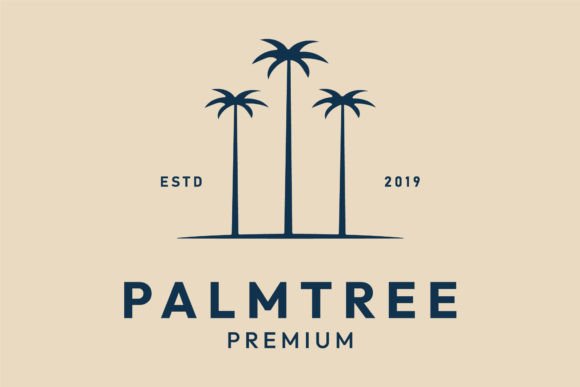
The moment you zoom into the vector files (EPS, SVG, PDF, JPG), you notice how little it tries to say—and how much it communicates anyway. It’s not a lush tropical scene; it’s a single palm silhouette with subtle vintage weight in the trunk, tapered fronds, and just enough negative space to breathe. No gradients, no shadows, no clutter. That minimalism isn’t lazy—it’s intentional restraint. For embroidery designers, that means fewer stitch jumps, smoother satin stitch runs, and cleaner fill areas. It feels like a logo made *for* stitch count—not against it.
Where It Shines: Real Projects, Real Fabric
I stitched Palm Tree Vintage Logo Minimalist Vector on three very different items: a medium-weight organic cotton sweatshirt (left chest), a lightweight tea towel (corner placement), and a 3” embroidered patch sewn onto a denim apron. In every case, it read clearly—no blurring, no thread nesting, no “what is that supposed to be?” confusion. That’s rare for a single-tree motif at small scale.
- Custom apparel: Works beautifully on crewnecks and relaxed tees—especially when paired with tonal thread (e.g., oat thread on heather grey). The clean outline translates directly to running stitch borders and crisp satin fill.
- Tote bag design & aprons: Holds presence without overwhelming. On natural fibers, it reads as handmade—not digital—and supports the “intentional slow living” vibe many small shop products lean into.
- Baby embroidery & nursery decor: Soft enough for onesies and pillow covers, yet distinctive enough to avoid looking like generic clip art. Parents appreciate subtlety over flash—this delivers.
- Holiday embroidery & wedding gifts: Surprisingly versatile. Stitched in ivory thread on sage linen, it became a quiet monogram alternative for beach weddings or coastal baby showers.
Where to Pause—and Plan Ahead
This isn’t a “drop-in-and-stitch” file for every situation. Its strength is also its limit: minimalism demands precision. On textured fabrics (like terry cloth towels or bouclé knit), the fine trunk line can disappear unless you adjust stitch density or add a light stabilizer layer. And while the vector scales cleanly, shrinking it below 2.5” risks losing definition in the frond tips—critical if you’re planning a cap or hat front embroidery.
Also note: the description says “non-editable text.” That means if your version includes a wordmark or tagline—even subtly integrated—it won’t adjust with the rest of the vector. You’ll need to treat it as a locked element. For commercial embroidery or Etsy sellers bundling branded designs, confirm whether that text is part of the logo lockup or separate before finalizing mockups.
What It Does for Your Handmade Product—and Your Customer
When customers see Palm Tree Vintage Logo Minimalist Vector stitched on a finished product, they don’t see “vector file.” They see intention. They see craftsmanship. That matters—especially for handmade goods sold online, where first impressions are scroll-deep and trust is earned in milliseconds.
It elevates perceived value without shouting. A sweatshirt with this logo doesn’t scream “logo tee”—it whispers “curated.” That builds brand consistency across tote bags, patches, and kitchen textiles. And because it avoids trendy tropes (no flamingos, no sunsets, no script fonts), it stays relevant season after season—a smart asset for craft businesses building long-term design libraries.
Practical Embroidery Designer Notes
Before stitching Palm Tree Vintage Logo Minimalist Vector, do these five things:
- Test on scrap fabric first—especially if using stretchy knits or dark backgrounds. See how the frond ends hold up under tension.
- Check thread color contrast carefully. This design relies on shape, not saturation. A low-contrast combo (e.g., charcoal on navy) may vanish unless you add a subtle underlay stitch.
- Review stitch density in your embroidery software. Minimalist doesn’t mean sparse—the trunk needs enough coverage to avoid fabric show-through.
- Confirm hoop size compatibility. While the vector scales, your machine’s maximum stitch area may require slight repositioning for balanced placement on curved surfaces like caps.
- Use proper stabilizer—light cutaway for knits, tear-away for stable wovens. Skip the “no stabilizer” experiment here; the clean lines demand support.
And one more thing: if you’re an Etsy seller or digital product creator, double-check licensing terms. The product page says “you can change vector-based designs as you wish,” but “non-editable text” suggests some elements may be embedded. When in doubt, reach out to the creator—or better yet, test a modified version on a non-commercial item first.
Final Thought: Less Is Truly More—When It’s Done Right
Palm Tree Vintage Logo Minimalist Vector won’t dominate a trade show booth or go viral on Instagram—but it will earn repeat customers, thoughtful reviews, and quiet respect from fellow makers. It’s the kind of logo that belongs on a well-loved apron, a baby’s first summer blanket, or the inside seam of a custom tote. It’s not flashy. It’s functional, flexible, and quietly confident. And in embroidery—where every stitch carries weight—that’s the highest compliment.