Mug Sublimation Boho Brown Gold Cork
First Impressions: Warm, Earthy, and Quietly Luxe
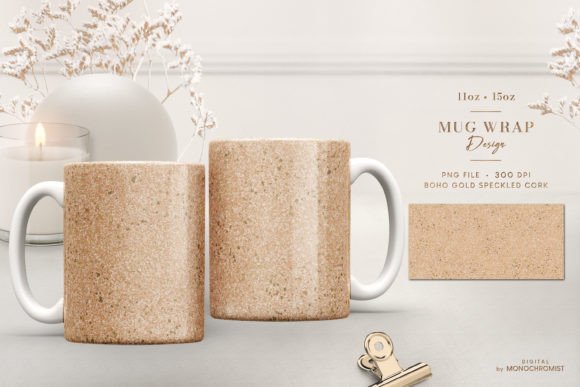
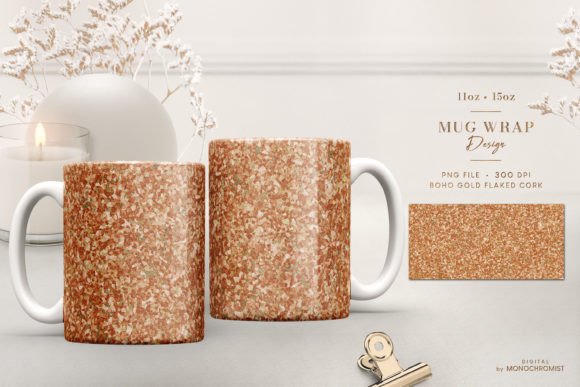
When I opened Mug Sublimation Boho Brown Gold Cork, I didn’t see a “mug wrap” — I saw texture waiting to translate. The brown cork base reads rich and organic, not flat or muddy; the golden flakes aren’t glittery or loud, but soft, scattered, and intentional — like sunlight catching dried eucalyptus on a wooden shelf. It’s a design that breathes. As an embroidery designer who regularly adapts sublimation graphics for stitch, my first thought wasn’t “this is pretty,” but “this has weight.” That matters. It means it’ll hold up when translated into satin stitch borders, subtle fill-stitch backgrounds, or even as a layered applique motif on a linen tote.
A Real Project Test: Embroidering a Boutique Kitchen Towel Set
Last week, I prepped a small batch of kitchen towels for a local café pop-up — natural cotton twill, medium-weight, with hand-rolled hems. I wanted something warm but refined: no florals, no clichés, just quiet sophistication. Mug Sublimation Boho Brown Gold Cork felt like the right starting point. I resized it to fit a 4” x 3” vertical panel near the towel’s corner, then digitized a simplified version: cork texture interpreted as low-density fill stitch (35% density), gold flakes converted to tiny satin-stitched ovals (2.2mm max width), and outer edges softened with a narrow running-stitch border for handmade authenticity.
The result? Customers paused. Not because it shouted, but because it *settled* — like the mug it was designed for. One buyer said, “It feels like something I’d keep forever.” That’s the signal: this isn’t background noise. It’s a tactile anchor.
Where It Shines — and Where It Needs Thought
Mug Sublimation Boho Brown Gold Cork excels in projects where warmth, craft integrity, and subtle luxury intersect:
- Embroidered tote bag design — works beautifully on canvas or heavy cotton, especially when paired with tonal thread (taupe, oat, antique gold)
- Sweatshirt embroidery — scaled down to 3.5”, it reads cleanly on fleece-backed fabric without overwhelming the garment’s relaxed vibe
- Baby embroidery — ideal for organic cotton onesies or burp cloths when stitched with ultra-soft poly thread and minimal density
- Embroidered patch — clean outer shape makes it easy to cut and fuse; gold accents lift nicely against denim or corduroy
- Holiday embroidery — think minimalist gift tags, linen napkin corners, or ceramic mug sleeves (yes, even though it’s named for sublimation — its aesthetic translates)
But here’s what I watch closely:
- Small hoop sizes: Below 3”, the gold flakes lose distinction. They become specks, not accents. Stick to 3.5” minimum for clarity.
- Textured fabrics: On bouclé or thick terry cloth, the cork texture can blur. Use tear-away + light cutaway stabilizer, and reduce fill stitch density by 10–15%.
- Stretchy fabric: Avoid direct use on knits unless you’re adding a mesh backing or converting it to applique with tight satin borders.
- Dark fabric: The brown base recedes. Test thread contrast early — a warm cream or pale brass thread lifts the gold better than white on charcoal.
- Curved surfaces: Caps or curved mugs demand careful hooping. This design’s asymmetry helps — place the denser cork area over the flatter front panel, not the crown seam.
What It Does for Your Craft Business — Beyond the Stitch
As an Etsy seller and small shop product developer, I judge designs not just by how they stitch, but by how they land with customers. Mug Sublimation Boho Brown Gold Cork quietly elevates perceived value. It doesn’t scream “handmade!” — it whispers “thoughtfully made.” That builds trust. Buyers associate that earthy-gold palette with sustainability, slow living, and artisan care — all without a single word on the tag.
For branding, it’s flexible but focused: pair it with neutral packaging, serif typography, and matte paper labels, and it reads boutique-ready. Use it across product lines — a matching embroidered tea towel, apron, and baby blanket — and it creates cohesion without repetition. And yes, it works in printable mockups too: the contrast between cork and gold holds up in grayscale previews, which matters when buyers scroll fast on mobile.
Practical Designer Notes Before You Stitch
This isn’t a “load-and-go” embroidery file — it’s a design asset that rewards intention. Before committing to your next batch:
- Test the design on scrap fabric first — especially if using it on textured or dark substrates
- Review stitch density: high-density fills will flatten the cork’s organic feel; aim for open, breathable fills
- Confirm hoop size compatibility — its layout favors rectangular or square hoops over round
- Inspect small details at actual size: those gold flakes should be legible, not fused into blobs
- Try a black-and-white mockup: if the contrast collapses, adjust thread values or simplify the gold elements
- Compare light vs. dark fabric backgrounds — the brown base shifts dramatically between ivory linen and navy twill
- Use proper stabilizer: medium-weight cutaway for stable fabrics, tear-away + topping for napped surfaces
- Verify licensing: since this falls under Print Templates and Graphics, confirm whether commercial use of finished embroidered items is permitted — many sublimation designs restrict resale of physical products unless upgraded
And one final note: this design doesn’t need to be everywhere. Its strength is restraint. A single, well-placed Mug Sublimation Boho Brown Gold Cork on a linen pillow cover says more than three busy motifs on a sweatshirt. In a market flooded with loud patterns, that kind of quiet confidence is rare — and commercially valuable.