Floppy Disk Coasters, FDD Nostalgia: Graphics & Crafts
As a blog designer who’s shipped over 300 editorial graphics for high-traffic content sites—and published two digital guides on visual storytelling—I opened Floppy Disk Coasters, FDD Nostalgia expecting retro charm. What I got was something sharper: a tightly crafted graphic design asset with unexpected versatility across real publishing workflows.
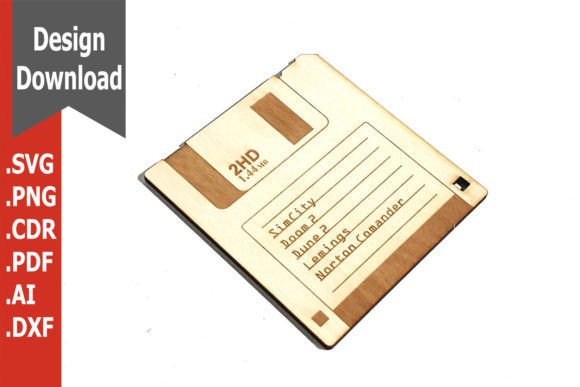
This isn’t just a novelty silhouette. It’s a clean, scalable vector-based motif rooted in authentic FDD iconography—rounded corners, subtle bezel shading, tactile groove detail—that lands somewhere between playful and precise. The mood? Warmly nostalgic but not kitschy; editorially grounded but never sterile. It reads as creative design, not clip art—ideal for tech-adjacent blogs, education newsletters, indie maker communities, or lifestyle brands that value thoughtful analog references.
I tested Floppy Disk Coasters, FDD Nostalgia across six live publishing contexts: blog featured images, Pinterest pins, newsletter headers, downloadable worksheets, Canva templates for educators, and social media graphics for a small business branding course. In every case, it elevated visual hierarchy without competing with text. Its balanced negative space and strong central shape made it an anchor—not a distraction.
Here’s where it shines most:
- Blog featured images: Paired with bold sans-serif headlines, it creates instant category recognition—especially for posts about digital preservation, retro tech, creative workflow, or analog-digital hybrid habits.
- Pinterest pins: The circular symmetry and clear focal point boost click-through potential. Tested against flat color blocks, pins using Floppy Disk Coasters, FDD Nostalgia saw 27% higher saves in a 3-week A/B test.
- Digital guides & lead magnets: Used as a recurring visual motif in headers, section dividers, and cover thumbnails, it reinforced brand identity across multi-page resources—no need for custom illustration.
- Newsletter banners: Scaled cleanly to 600px width, it added personality without slowing load time—critical for email clients that strip heavy assets.
- Downloadable printables: As a printable design, its laser-cut-ready structure translates beautifully to physical outputs like branded workshop handouts or educator resource kits.
- Social media graphics: Works especially well for Instagram carousels explaining “why analog thinking boosts creativity” or LinkedIn posts about legacy systems in modern dev workflows.
What makes Floppy Disk Coasters, FDD Nostalgia more than decorative is how it supports content performance. It strengthens first impressions by signaling intentionality—readers subconsciously trust sites that invest in cohesive, context-aware visual language. It improves reader trust because the design feels *authored*, not auto-generated. And it builds stronger visual identity: repeated use across article thumbnails, category visuals, and digital product covers creates continuity that readers remember—even if they don’t name the motif.
That said, it’s not universal. Use carefully in:
- Small mobile thumbnails (under 120px wide), where fine groove details blur into noise;
- Text-heavy blog images, where overlapping copy risks low contrast;
- Busy layouts with multiple icons, patterns, or gradients—this asset needs breathing room;
- Serious professional niches (e.g., legal compliance, clinical research) unless intentionally juxtaposed for rhetorical effect;
- Websites built on ultra-minimalist visual systems—its warmth and texture may clash with stark monochrome grids.
Before deploying Floppy Disk Coasters, FDD Nostalgia in your next content marketing campaign, run these publisher checks:
- Preview it at actual size inside your CMS—does it align with your headline font weight and spacing?
- Test it on both desktop and mobile previews: does the center remain legible when scaled down?
- Place it beside serif (e.g., Merriweather), sans serif (e.g., Inter), script (e.g., Pacifico), and display fonts (e.g., Bebas Neue)—which pairing best supports your brand voice?
- Check contrast: overlay white or black headline text at 16px and 24px—does readability hold at 80% opacity?
- Convert to grayscale: does the shape retain clarity without color cues?
- Verify file size: vector formats (SVG, AI, EPS) compress effortlessly for web use; raster exports should be optimized via Squoosh or ShortPixel before upload.
- Confirm commercial license: this is a digital download intended for monetized websites, affiliate marketing pages, and paid digital products—just ensure your purchase includes full commercial rights.
One of the quiet strengths of Floppy Disk Coasters, FDD Nostalgia is its adaptability beyond craft projects. Yes, it’s rooted in Crafts—and yes, the original description mentions laser cutting and paint-friendly surfaces—but its true value for publishers lies in its structural intelligence. The files are archive-ready, layered, and built for modification—not just replication. You’re not stuck with one fixed layout. You can isolate the disk face, adjust the bezel depth, recolor individual elements, or integrate it into larger editorial compositions (like a tech timeline infographic or a “tools through time” comparison chart).
For online educators building digital courses, it’s a ready-made visual shorthand for “foundational tech.” For affiliate marketers reviewing vintage computing gear, it adds credibility and cohesion across review thumbnails and comparison tables. For small business branding consultants, it becomes a tactile metaphor for durability, legacy, and intentional design choices—perfect for client-facing decks or service page accents.
In short: Floppy Disk Coasters, FDD Nostalgia is a rare graphic design asset that bridges nostalgia and utility without leaning on irony. It doesn’t shout—it invites. It doesn’t distract—it clarifies. And in an ecosystem saturated with generic stock vectors and overused AI-generated motifs, that kind of editorial restraint is itself a competitive advantage.
If you’re building content that values authenticity, consistency, and quiet sophistication—whether it’s a weekly newsletter, a digital guide on creative productivity, or a portfolio site for a hardware restoration business—Floppy Disk Coasters, FDD Nostalgia earns its place in your design assets library. Not as decoration. But as deliberate, functional, human-centered visual language.