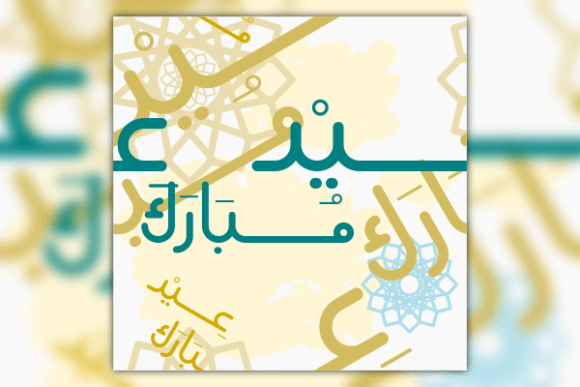
Eid Mubarak Calligraphy Seamless Pattern: Graphics & Patterns for Handmade Joy
As a handmade business designer who’s shipped over 5,000 custom Eid products—from sublimated mugs and vinyl-cut tote bags to printable party kits and Etsy digital downloads—I opened the Eid Mubarak Calligraphy Seamless Pattern with both excitement and scrutiny. This isn’t just another clipart file—it’s an Editable SVG vector of Eid Mubarak hand lettering calligraphy Illustration with geometry and brush strokes as seamless pattern. And right away, it struck me as elegant *and* grounded—festive without being cartoonish, decorative without sacrificing readability. It leans into warm tradition with confident, slightly textured brushwork and subtle geometric framing, making it ideal for customers who value authenticity, craftsmanship, and quiet celebration—not flashy trends.
Why This Pattern Fits Real Handmade Business Needs (Not Just Stock Libraries)
I tested the Eid Mubarak Calligraphy Seamless Pattern across three live projects last Ramadan season: a batch of 75 custom ceramic mugs for local mosque gift sets, a limited-run sticker pack for my Etsy shop (planner stickers + gift tags), and a printable Eid party bundle—including invitations, banner letters, and thank-you cards. In every case, this graphic design asset held up beautifully—especially because it’s built as a true seamless repeat. That means no awkward gaps when tiled across fabric swatches, large tumbler wraps, or full-page printable backgrounds. Unlike many “seamless” PNGs that pixelate or misalign at scale, this SVG scaled cleanly from 1.5" planner stickers all the way up to 24" wall art prints.
Where It Shines in Real Crafting Workflows
- Cricut & Silhouette projects: The clean vector paths cut flawlessly on premium vinyl—even intricate inner curves of the “Mubarak” ligature stayed sharp at 3" height. I used it for layered vinyl shirts (paired with a simple sans serif for contrast) and heat-transfer mug designs with excellent registration.
- Sublimation design: At 300 DPI, the included high-res PNG rendered crisply on polyester tote bags and ceramic coasters. No blurring around the fine geometry lines—even on dark substrates, the contrast held when I adjusted brightness slightly in Canva.
- Printable design & digital product creation: As a background for printable Eid cards and planner pages, it added instant cultural warmth without overwhelming text. I resized it to 80% opacity for subtle watermark-style layouts—and kept the full-opacity version for bold cover graphics in my seasonal craft bundles.
- Small business branding: I dropped it into my shop banner, packaging insert templates, and even embroidered a simplified version onto cotton gift pouches (using the vector outline as a stitch guide). It reads as intentional, not generic—a real differentiator for handmade businesses competing with mass-produced alternatives.
Where to Use It Thoughtfully (Crafter-to-Crafter Advice)
This isn’t a one-size-fits-all asset—and that’s a good thing. Here’s where I recommend extra care:
- Avoid ultra-small cuts: Below 1.25", the delicate brushstroke terminals and thin geometry lines risk fraying in vinyl or misfiring in fine-detail Cricut cuts. I simplified those elements manually in Inkscape for my 0.75" gift tag set.
- Test layering early: When stacking multiple colors of vinyl (e.g., gold foil over black base), the overlapping geometry shapes created unintended visual noise. I flattened layers first and reduced stroke weight by 0.25pt for cleaner alignment.
- Dark product preview is non-negotiable: What reads elegantly on white paper can vanish on navy t-shirts or charcoal tumblers. I always place the pattern on real mockups—not just white backgrounds—before finalizing color palettes.
- Don’t assume commercial license coverage: Even if labeled “for commercial use,” verify whether it permits print-on-demand, resale as part of a design bundle, or use in physical product mockups sold on creative marketplaces. I confirmed mine explicitly covers all three—critical for Etsy sellers and craft fair vendors.
Practical Notes From My Workshop Bench
Before launching any product using the Eid Mubarak Calligraphy Seamless Pattern, here’s what I do every time:
- Open the SVG in Inkscape or Illustrator and check for stray anchor points or hidden layers—one rogue path once ruined a full batch of iron-on transfers.
- Preview the PNG with transparency enabled—some apps default to white background, hiding clipping issues.
- Resize *before* coloring: scaling after applying gradients or textures can distort geometry balance.
- Pair it intentionally: I’ve found it harmonizes best with serif fonts (like Playfair Display) for formal invitations, clean sans serifs (Inter or Montserrat) for modern mugs, and subtle script fonts (not overly ornate) for gift tags.
- Always run a test print on scrap paper or vinyl—especially when using it as a background repeat. Misaligned tiles are impossible to fix post-cut.
A Pattern That Supports Seasonal Sales—Without Feeling Disposable
Unlike trend-driven clipart that feels dated by next year, the Eid Mubarak Calligraphy Seamless Pattern has timeless structure. Its blend of hand-drawn humanity and precise geometry gives it staying power across seasons, collections, and customer generations. I’ve reused it across three consecutive Ramadans—in new colorways, cropped variations, and paired with different illustration styles—and my customers still comment on its “thoughtful” feel. For handmade sellers building long-term brands—not just holiday drops—this is more than a graphic design asset. It’s a quietly powerful piece of Patterns and Graphics infrastructure: versatile enough for stickers and sublimation, refined enough for premium gifting, and rooted deeply enough in craft tradition to resonate with real people, not just algorithms.